How to Figure Out the Right Position in Football
Your kid's a few seasons in and positions are starting to matter. Here's how to read their strengths and understand where they might suit best.
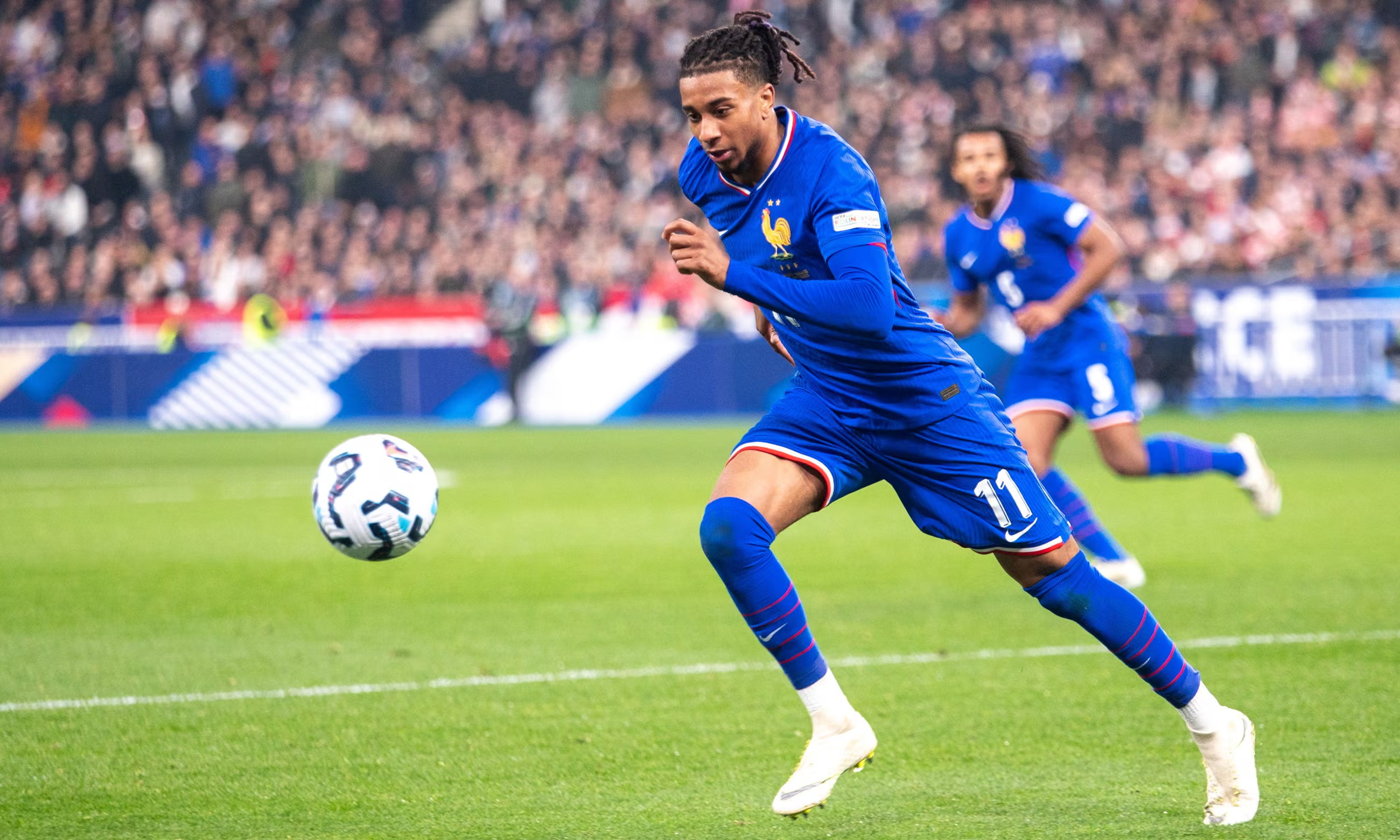
Once your kid is a few seasons in, positions start to matter. Coaches are making deliberate choices. Your kid has opinions. And you're on the sideline trying to work out whether they're actually a midfielder or you're just guessing.
You don't need a coaching licence. You just need to watch what your child naturally does when the game gets messy — and understand what those instincts point toward.
It's about patterns, not permanent labels
Even at U10–U14, positions aren't set in concrete. Kids develop at different rates, their bodies change, their confidence shifts, and a kid who's a natural winger at 11 might become a brilliant full back at 14. The best players at youth level are usually the ones who've experienced multiple roles.
But by now, patterns are emerging. Your kid has strengths that show up consistently. They have things they enjoy and things they gravitate toward without being told. Understanding those patterns helps — both for supporting your kid and for making sense of what their coach is doing.
Start with what they actually love doing
This is the easiest way in.
Forget what sounds glamorous. Forget which position gets talked about the most. Watch what your kid wants to do without being told.
Do they always want the ball?
Do they love taking players on?
Do they sprint back to win it when they lose it?
Do they seem weirdly calm when everyone else is panicking?
That's your clue.
The kid who always wants to be involved
Some kids just can't stay out of the action.
They don't drift out wide and wait. They don't stand up front hoping the ball lands at their feet. They keep moving toward the play, asking for the ball, trying to connect everything together.
If your kid is a good passer, calm on the ball, has a decent engine on them, and seems to understand how to make teammates better — if they've got a good overview of what's happening around them and they know how to find space for themselves — your kid, my friend, sounds like a pretty decent central midfielder.
These are the kids who might not be the flashiest on the pitch, but they hate feeling disconnected from the game. Watch for this: can they receive the ball under pressure and keep it? Do they naturally turn and look forward rather than playing it safe? Do they seem to know where teammates are without looking?
That awareness is hard to fake.
The kid who gets the ball and says, "I'm having a go"
You know this one.
They receive it near the sideline and their first thought is not "safe pass back". Their first thought is "can I beat this defender?"
If your kid loves dribbling and beating players one-on-one, if they're fast — especially over the first five to ten metres — and they've got a decent cross on them or can cut inside and finish, well, your kid sounds like an ideal winger.
Confidence helps. So does a bit of cheek. They won't always pull it off — they'll probably lose the ball plenty trying things. That's part of the deal.
The extra thing to watch for: when they do beat a player, do they have a next action? A cross, a pass, a shot? A winger who can beat a defender AND deliver something useful is the real deal.
The kid who runs all day and still chases back
Some players have similar pace and drive to a winger, but there's one big difference: the one-on-ones and goal scoring aren't really their thing, yet they're still brilliant at using their speed to get forward and be involved. And here's the key part — they're equally good at tracking back and helping the team out.
If your kid has proper stamina, good general play, and is happy doing the team stuff that doesn't always get the biggest cheers, they wouldn't look out of place at full back or wing back.
It is a properly underrated role. They overlap, recover, defend, support, and then do it all again five minutes later. If your child has a big engine and a bit of grit, don't be surprised if a coach sees them here.
The kid who loves the battle
Some kids don't just tolerate the physical side of football. They love it.
If your kid is a strong player who's great at timing tackles to win the ball back, if they've got a calm head on and especially off the ball, and if they understand how to position themselves to break up the opposition's play — your kid sounds like they could be a very good centre back.
Good defenders aren't just the biggest kids. They read danger early. They position themselves to cut off passes before they happen. They stay switched on when the ball is at the other end. And when everyone else is running around like the game's on fast-forward, they often look strangely composed.
At JDL level and above, the thing to really watch for is this: can they win the ball AND then do something useful with it? Centre backs who can defend and play out from the back under pressure are increasingly what coaches want. If your kid can do both, that's not nothing.
The kid who sees passes other kids don't
Every now and then, a child does something that makes you stop mid-sip and go, "Ooh, that was nice."
Not because they scored. Because they saw a pass nobody else saw.
If your kid is agile and has a good precise passing range, if they can work in tight spaces, and especially if they have that vision — they can spot an opening and thread a ball through to a teammate to make them dangerous — your kid might well be an attacking midfielder.
Watch whether they look up before they receive the ball. That early scan is the clearest sign of a creative footballer. If your child is constantly trying to thread passes through traffic instead of putting their head down and charging, there's a decent chance they've got a playmaker streak.
The kid with a midfielder's brain and a defender's bite
Here's an interesting one.
If your kid has the passing range and game understanding of a central midfielder, but they're also a bit stronger, a bit more physical, and they're great at tackling and winning the ball back — they might actually suit being a defensive midfielder.
This role isn't glamorous. But these kids are brilliant at reading the game, nicking the ball back, and giving it straight to the right teammate. No fuss. No panic. Job done. They tackle, intercept, cover space, and help the whole team feel more settled.
It is the sort of role coaches absolutely love.
The kid who just keeps scoring
You'll know this one.
They might not be involved all the time. They might not have the fanciest touch on the pitch. But somehow, when the ball drops in the box, they're there. And then it's in the net.
If your kid has a bit of speed, can lose defenders and create space for themselves, and then uses great finishing with power and precision — your kid, my friend, should be playing as a striker.
The big clue isn't just scoring goals. It's finding goals. Timing runs. Getting free. Staying alert. Having that nose for where the chance is about to appear. That instinct is real.
One thing to keep in mind: at U9–U11, some kids score heaps because they're quicker or more physically developed than everyone else right now. That advantage often levels out by U13–U14. So look beyond the raw goal tally and watch how they score. Are they finding space intelligently? Are they composed one-on-one with the keeper? Those are the striker traits that translate as the competition gets harder.
The kid who doesn't mind the ball flying at them
And then there's the child who volunteers to go in goal.
Which, if we're honest, can feel mildly unhinged the first time you see it.
But some kids genuinely love it. If your kid is reasonably tall, isn't afraid of the ball — because they're going to come flying at them — and has great handling, good reflexes, and can catch or at least block shots consistently, they should probably give goalkeeper a proper go.
Not because nobody else wanted the gloves. Because something about the role clicks for them. Modern keepers also need to be comfortable with the ball at their feet — they're part of the build-up play now, not just shot-stoppers. If your kid has all of that, they might be great at it.
What if your kid looks like two or three positions at once?
That's normal.
A player can absolutely look like a winger and a full back. Or a midfielder and a defensive midfielder. Or a striker who could also do a job out wide.
That overlap is a good thing, not a problem.
Versatile players are useful. More importantly, they keep learning.
A lot of the time, the difference comes down to temperament. Does your child want to create or finish? Attack or defend? Be at the centre of everything or quietly make the team work?
Watch what they choose when the game opens up. That usually tells you more than any sideline debate ever will.
If the coach sees something different, don't panic
This is the bit plenty of parents struggle with.
Your child thinks they're a striker. You've sort of accepted they're a striker. Then the coach moves them to midfield. Or full back. Or somewhere else entirely.
That can feel like a demotion.
Usually, it isn't.
Quite often, it means the coach has spotted a strength your child hasn't noticed yet. Maybe they read the game well. Maybe they defend better than they realise. Maybe they've got the engine to do more than one job.
It's worth giving that move a proper chance.
Not one half.
Not one grumpy car ride home.
A real chance.
Some kids find their best position because someone else saw it first.
So where should your kid play?
Here's the honest answer: the best position is the one where your kid's strengths get used, they're challenged to develop, and they still enjoy turning up.
Even at JDL and rep level, it's not set in stone. Plenty of very good players shift positions between U10 and U16 as their game matures, their body changes, and coaches see new things in them.
So instead of asking "what position should they be?", try asking this:
Where do they look most alive? Where do they help the team naturally? Where do they seem to understand the game best?
Start there. Watch the patterns. Talk to the coach. And listen to your kid — they usually know more about where they feel right than they can articulate.
Next time someone on the sideline confidently declares your child is "definitely a number 10", you can smile, take a sip of your coffee, and know you've actually got a better way to think about it.