FG, AG, MG, TF — Which Boot Soleplate Does Your Kid Actually Need?
A no-nonsense guide to choosing the right football boot soleplate for junior players in NSW — whether your kid plays on grass, artificial grass, or a mix of both.
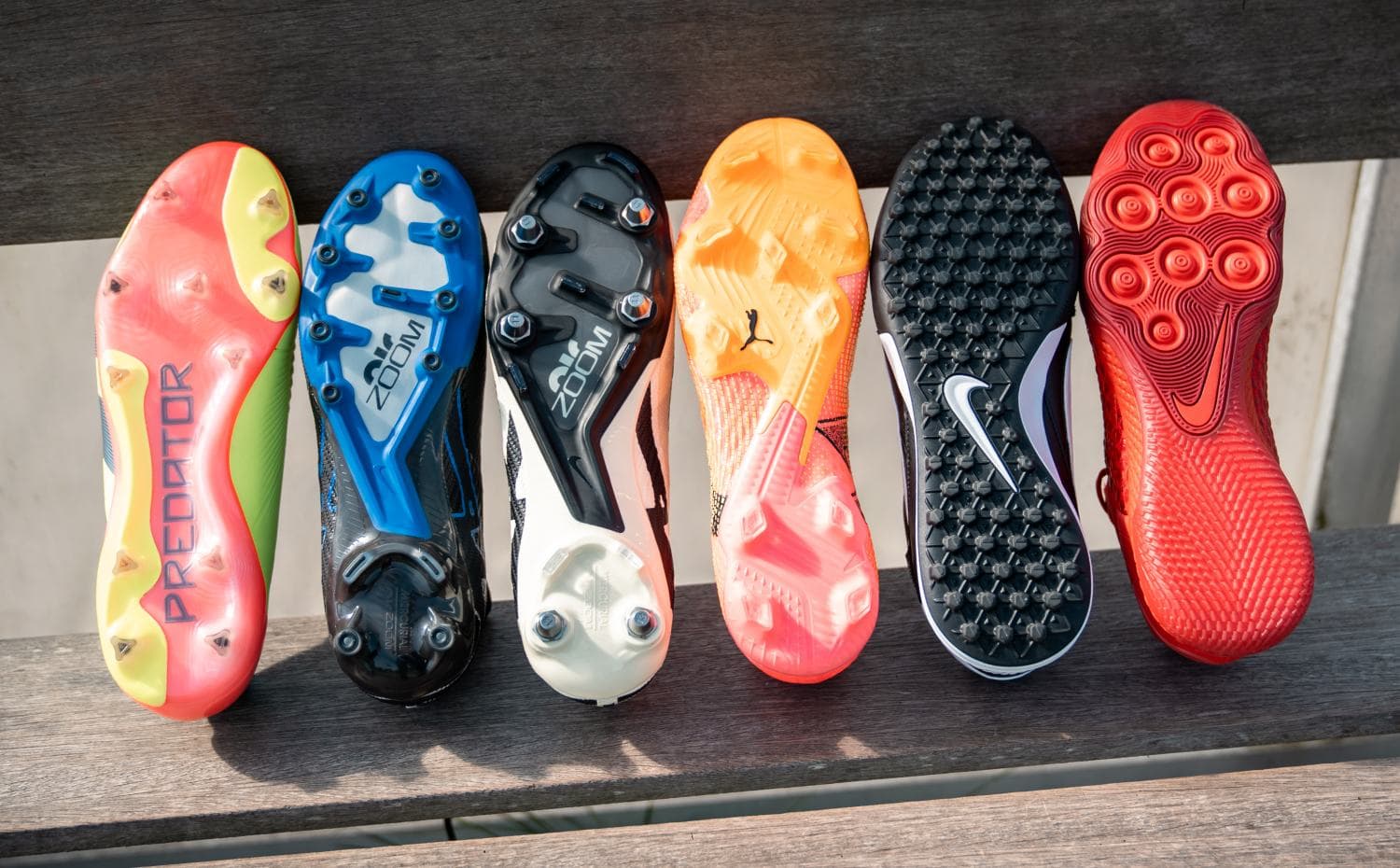
You're standing in Rebel Sport, your eight-year-old is tugging your arm toward the brightest pair of Nikes on the wall, and the box says "FG." The pair next to it says "AG." There's another one that says "TF." And you're thinking — what's the difference, and does it actually matter for a kid in under 8s?
Short answer: yes, it matters. But probably not in the way you'd expect.
The one thing you actually need to know
Here's the deal. Boots are designed for specific surfaces. Put the wrong soleplate on the wrong pitch and your kid either slips around, gets stuck, or wrecks a $120 pair of boots in three weeks.
The tricky part is that NSW has a real mix. In metro Sydney, the Central Coast, and parts of the Hunter, artificial grass pitches are everywhere — those green surfaces with the little black rubber crumbs that end up in your car, your washing machine, and somehow your bed. But in plenty of other areas — the Illawarra, regional NSW, outer suburbs — natural grass is still the main game, and some regions might only have one or two synthetic pitches in the whole area.
So before you buy anything, figure out what surface your kid actually plays on most of the time. That's the pitch at training (usually twice a week) and the pitch on game day. That answer determines which soleplate you need.
The soleplates explained (parent version)
FG — Firm Ground
These are the "default" boots. If you grab a pair off the shelf without thinking about it, you're probably buying FG. They have longer studs (usually 10–14 of them) designed to dig into natural grass and dirt.
On artificial grass, those longer studs can't dig in properly. The surface is harder and grippier than real grass, so the studs either don't grip well or they grip too much — which means your kid's foot plants and their knee twists. That's how ankle and knee injuries happen, even in young players.
FG boots on artificial grass also wear down fast. The abrasive surface chews through the soleplate, and if the boots break, the warranty won't cover it because they weren't designed for that surface.
FG makes sense if your kid plays exclusively on nice, well-maintained natural grass. Some clubs in outer suburbs and regional NSW still play primarily on real grass. But even then, training is often on synthetic.
MG — Multi Ground (the one most young kids actually need)
Here's something the international boot guides won't tell you: in Australia, MG (multi-ground) is the most common and practical soleplate for kids under about 10. Most brands make their junior boots in MG rather than dedicated AG, and for good reason — MG works well on artificial grass, natural grass, and the mixed surfaces young kids end up playing on.
MG boots have more studs than FG, and they're shorter and more evenly spread. That gives decent grip on synthetic pitches without the injury risk of long FG studs, and they still work fine on grass. They're the true all-rounder at junior level.
If you walk into Rebel Sport or Ultra Football looking for boots in a size 13 kids or smaller, you'll find the shelves are mostly MG. That's not a compromise — it's the right soleplate for this age group.
For MiniRoos and kids up to about U10, MG is your go-to. Don't stress about finding AG-specific boots at this age — MG handles everything your kid will play on.
AG — Artificial Grass (for older juniors and youth)
Once your kid hits U10–U12 and starts playing on more consistent artificial grass pitches — especially if they're moving into JDL, rep, or academy programs — that's when dedicated AG boots become more widely available and worth considering.
AG boots have shorter, more numerous studs than FG — sometimes up to 25 of them, often hollow to spread pressure more evenly and reduce stress on joints. They're specifically designed for synthetic surfaces, giving better grip on artificial grass without the "stuck foot" problem that FG studs can cause.
Not all AG boots are the same though. Some brands — Nike's "AG-Pro" line and Adidas's AG options — look quite similar to FG boots. They're designed for modern 4G artificial grass (the type that looks and feels closer to real grass). These hybrid-style boots actually work reasonably well on natural grass too, making them a solid all-rounder for older kids who train and play on both surfaces.
AG becomes the right choice from about U10 upwards, especially if your kid is playing on quality artificial pitches. Below that age, MG does the job.
TF — Turf
Turf shoes have a flat-ish rubber sole covered in tiny little studs or nubs. Think of them as the halfway point between boots and runners.
They work well on very old or worn artificial pitches, hard compacted surfaces like school playgrounds, and for futsal training outdoors. They're also a solid option for really young kids (under 7) who are just starting out and don't need aggressive studs yet.
For MiniRoos at the U6–U8 level, TF boots are honestly a fine choice. The pitches at that age are often shared ovals or older surfaces, the games are small-sided, and your kid isn't cutting and sprinting hard enough for stud type to be a major performance factor. Comfort and fit matter way more at this age than soleplate technology.
SG — Soft Ground
Metal studs. Longer. Fewer of them. Designed for mud.
You almost certainly don't need these for your kid. SG boots are for waterlogged natural grass pitches — the kind where you sink in up to your ankles. They're common in UK football, rare in NSW junior football. If your kid is playing in proper mud, they might come in handy, but it's not a first purchase. Or a second one.
What about "FG/AG" boots?
You'll see some boots labelled FG/AG. Sounds like the best of both worlds, right?
Not exactly. In most cases, these are basically FG boots where the brand has extended the warranty to cover artificial grass use. The stud pattern is still FG — longer studs, fewer of them. So from a safety and traction perspective, they perform like FG boots.
The warranty extension is nice. But don't assume FG/AG means "optimised for artificial grass." It doesn't.
So what should you actually buy?
Here's the decision tree for most NSW parents:
U6–U9, MiniRoos: MG boots. This is what's available in junior sizes, it works on everything, and it's exactly what your kid needs. Don't overthink it.
U6–U7, just starting out: Either MG or TF. Comfort and fit matter infinitely more than soleplate at this age. TF is great on mixed or rougher surfaces. MG is the safe default.
U10+ on artificial grass: This is where AG boots become worth it. More options open up in youth sizes. If they train and play on synthetic, dedicated AG gives the best grip and safety.
U10+ on both surfaces: An AG boot with an FG-like stud pattern (Nike AG-Pro, Adidas AG) works well on both. One pair that handles everything.
Mostly natural grass: FG boots are fine. Just don't use them on synthetic surfaces for training.
A note on fit (because this matters more than soleplate)
For kids aged 5–12, the fit of the boot matters more than almost anything else. A perfectly engineered AG soleplate in a boot that's too big, too narrow, or gives them blisters is worse than a slightly "wrong" soleplate in a boot that fits well.
Take your kid to the shop. Let them try boots on with the socks they'll actually wear on game day. Make sure there's about a thumb's width of space at the toe — enough to grow into, not so much that the boot flops around.
And don't get sucked into buying the $250 elite model for a kid whose feet will grow two sizes by next season. The $60–$120 range has excellent MG and AG options from Nike, Adidas, Puma, and New Balance. Save the top-spec boots for when their feet stop growing (so, approximately never).
The 30-second version
For kids under 10: buy MG boots. They're what's available in junior sizes, they work on every surface in NSW, and they're exactly right for this age. For older juniors on artificial grass: move to AG. Either way, make sure they fit — that matters more than anything on the soleplate.
Now go measure their feet. Seriously. It takes 30 seconds, and it'll save you a return trip to the shops.